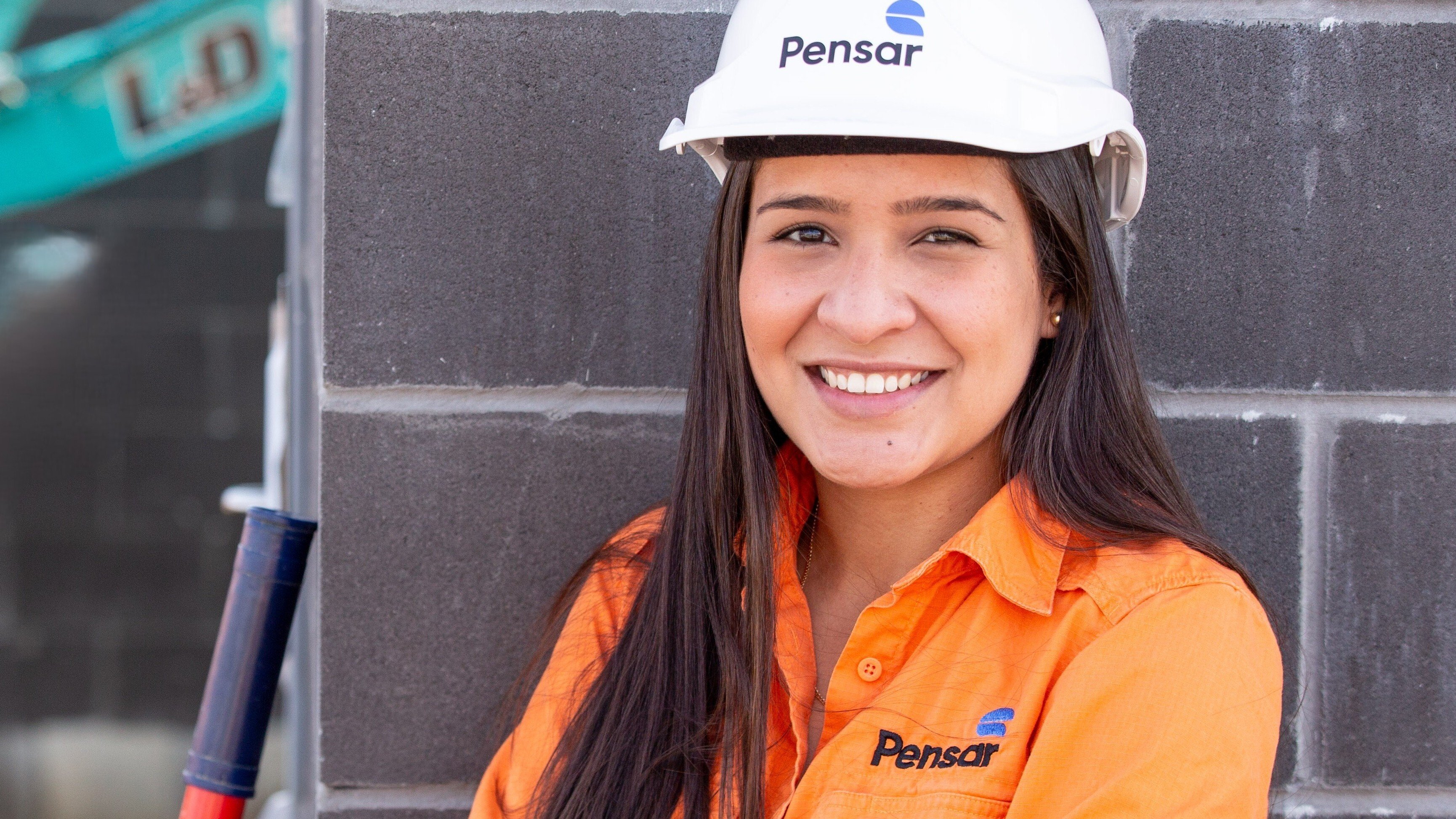
On a cattle property near Merriwa, Amy Swan’s working day often came down to one question: did the cattle have enough water?
She checked tanks, cleaned troughs and repaired floats and valves on her family’s 2,000 acre farm. Her father, who she had stepped in to help when he became ill, had a saying she never forgot.
“Water is life, without it nothing survives.”
Today, Amy works as a Wastewater Treatment Operator with Veolia. Her pathway into the sector took her through farming, cheesemaking and council maintenance before further training opened another opportunity.
Finding a new direction
After her father died in 2018, Amy took over the cattle business as drought tightened its grip. By the end of 2019, after drought and bushfires, she made the difficult decision to sell the stock and close the business.
Her next job was making cheese, before an opening with Upper Hunter Shire Council’s Water and Sewer team in Scone introduced her to water industry work.
She tested water samples, helped maintain pumps and worked on water and sewer networks. The resource she had spent years looking after on the farm had become the focus of a new career.
Building skills through practical work
After almost two years with the council, Amy moved to the Lower Hunter to undertake a Civil Maintenance traineeship with Hunter Water.
The work was varied: clearing sewer blockages, repairing infrastructure, reading plans and operating trucks and machinery.
Amy gained Certificate III qualifications in Water Industry Operations and Civil Construction Plant Operations, along with HR truck and forklift licences.
When a Wastewater Treatment Operator role with Veolia appeared, she applied.
Supporting people and the environment
For Amy, the appeal of her work comes down to its contribution to people and the environment.
“It benefits both people and the environment. I like knowing that what I do each day helps safeguard public health and our natural surroundings.”
It is a contribution that can be easy to overlook. Asked what would surprise people about water careers, Amy points to the work happening behind the scenes.
“You turn on the tap and get clean drinking water, or flush something away and never think about it again, but there’s a heap of daily work, checks, and problem solving that makes all of that look effortless.”
Learning alongside others
There is still plenty to learn. Amy particularly enjoys working with colleagues who are happy to share their knowledge and answer her “endless questions”.
“I learn something new every day.”
Her career has developed through practical experience and opportunities to gain new qualifications. For women wondering whether they could see themselves doing similar work, she has a straightforward invitation.
“If you’re even thinking about it, try it. The work’s interesting, the people are good, and you’ll pick things up quicker than you expect.”